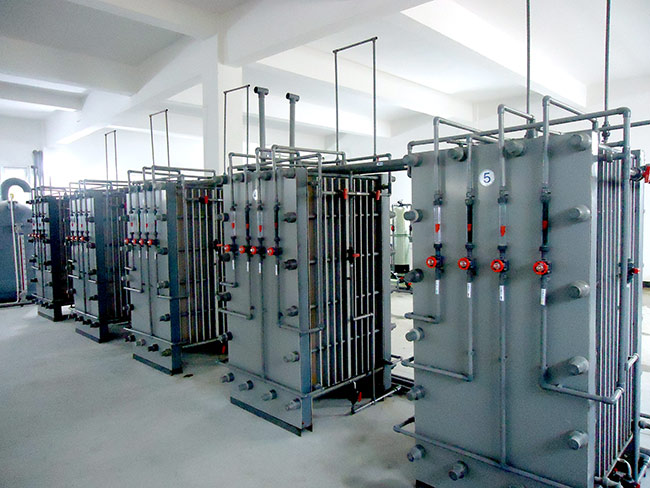
Diffusion dialysis (DD) is used in a 60 m³/day hydrofluoric acid and nitric acid recovery treatment project for a steel enterprise, showing the treatment scale and operating indicators of this technical route in similar projects.
Key indicators
- Treatment capacity: 60 m³/day
- Number of units: 10
- Membrane area: 500 m²
- Recovery rate: 80%
- Rejection rate: 93%
Project background
Stainless steel pickling generally uses a mixed acid system of hydrofluoric acid and nitric acid. During pickling, the acids are consumed while metal ions continue to accumulate, forming waste mixed acid.
Hydrofluoric acid in the mixed acid is relatively expensive and is a controlled material; direct neutralization and discharge both wastes resources and increases disposal costs.
The project aims to separate free acid from metal salts without changing the composition of the acid system, achieving mixed acid recovery and reduction.
Process route
- A hydrofluoric acid-resistant diffusion dialysis anion-exchange membrane is used, relying on the concentration difference to drive preferential permeation of free acid.
- Hydrofluoric acid and nitric acid molecules and acid ions migrate to the water side to form regenerated mixed acid, while metal ions such as iron, chromium, and nickel are retained.
- The pretreatment section includes filtration and temperature adjustment to control influent suspended solids and maintain stable membrane flux.
- The recovered mixed acid is returned for use according to the pickling bath solution formulation requirements, and the residual liquid enters the subsequent neutralization treatment process.
Operating performance
- Treatment capacity: 60 m³/day.
- Membrane stack equipment: 10 units.
- Membrane area: 500 m².
- Acid recovery rate: 80%.
- Impurity rejection rate: 93%.
Illustrative materials